
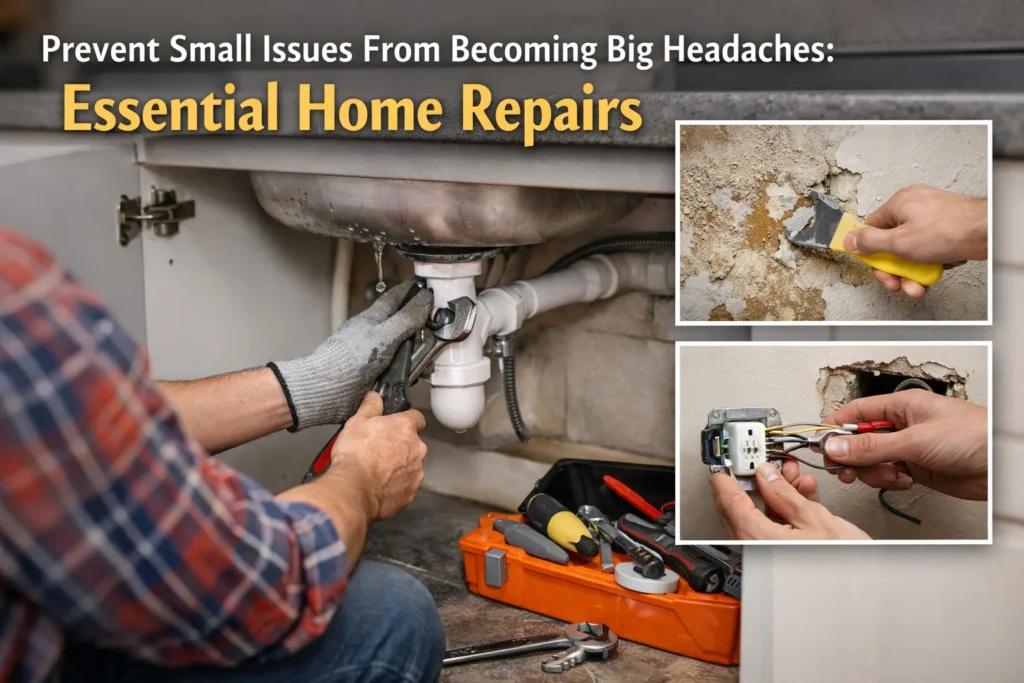
Prevent Small Issues From Becoming Big Headaches: Essential Home Repairs
Small issues often hide in plain sight. A tiny crack, a slow leak, or a loose fitting may seem harmless. Over time, these minor problems weaken structures and inflate repair costs. At Mqoola Services, we see firsthand how early attention saves homes from serious damage. This guide explains which small home repairs matter most, why timing is critical, and how preventive care protects both safety and value.
Why Small Repairs Matter More Than You Think
Minor damage rarely stays minor, and small faults quietly spread stress across your home’s structure when ignored. Delaying repairs allows moisture, pressure, and movement to work against walls, floors, ceilings, and joints, slowly weakening stability and comfort over time.
The Cost of Ignoring Early Warning Signs
Even a small issue can trigger multiple failures when left unchecked, especially in older properties or frequently used spaces.
- Hairline cracks allow water seepage
- Loose fittings strain pipes and joints
- Minor dampness weakens internal materials
How Damage Escalates Inside the Structure
Structural damage rarely happens overnight. It builds gradually through repeated exposure, unnoticed leaks, and everyday usage stress.
- Moisture seeps into concrete and wood
- Small shifts widen cracks over time
- Load-bearing elements lose strength
Early intervention preserves foundations, prevents surface decay from spreading inward, and helps homeowners avoid disruptive repairs that affect daily living.
Plumbing Repairs That Protect Walls and Foundations
Water damage is one of the most destructive forces inside a home, often spreading silently before visible signs appear. Leaks commonly begin behind walls or beneath floors, creating long-term pressure on concrete, plaster, and support beams. Small drips that seem harmless can quietly erode materials, encourage mold growth, and increase repair costs if left unattended. Regular inspections and early fixes are key to maintaining both safety and comfort throughout your home.
Hidden Leaks That Should Never Be Ignored
Plumbing problems often remain invisible until damage becomes severe, costly, and structurally risky.
- Damp patches on walls or ceilings
- Drop in water pressure
- Mold or musty odors indoors
Why Timely Plumbing Fixes Matter
Unchecked leaks weaken foundations, compromise indoor air quality, and create ideal conditions for decay. Early intervention preserves internal structure and prevents secondary issues like warped floors or damaged cabinetry.
- Water erodes concrete and grout
- Wood swells and loses strength
- Electrical systems face exposure risks
Many homeowners only notice the issue during situations requiring emergency home repairs, when earlier action could have prevented structural impact entirely, saving time, money, and stress.
Electrical Fixes That Prevent Structural and Fire Damage
Electrical issues affect more than lighting or power supply. Loose wiring and faulty connections generate heat inside walls, slowly damaging insulation, drying surrounding materials, and increasing long-term fire risk, especially in older buildings or overloaded circuits.
Common Electrical Issues That Start Small
Early warning signs often appear before serious damage develops, but are frequently ignored during daily routines.
- Flickering lights
- Warm outlets or switches
- Tripping breakers
How Electrical Problems Affect Structural Safety
Heat stress weakens materials over time, especially in concealed spaces where damage spreads unnoticed.
- Insulation degrades inside walls
- Wood framing dries and cracks
- Fire risk increases unnoticed
Addressing electrical faults early preserves wall integrity, protects hidden systems, improves overall safety, and prevents costly reconstruction caused by preventable overheating and long-term material fatigue.
Cracks, Gaps, and Seal Failures in Walls and Floors
Cracks are not always cosmetic and often indicate deeper movement within the structure. Small gaps allow air, moisture, and pests to enter internal layers, accelerating wear and weakening surrounding materials over time, especially in high-use living areas.
Where Cracks Usually Begin
Certain areas experience repeated stress and environmental exposure due to movement, temperature changes, and daily use.
- Around doors and windows
- Near ceilings and corners
- Along tiled flooring lines
Why Proper Sealing Is Essential
Correct sealing protects internal materials and slows deterioration while supporting overall indoor comfort.
- Prevents moisture penetration
- Reduces internal shifting
- Maintains temperature control
Using incorrect fillers or rushed fixes often leads to installation mistakes that cause costly repairs and further structural weakening, reducing the lifespan of walls, flooring, and adjacent fixtures.
Maintenance Gaps That Turn Renovations Into Regrets
Renovation without maintenance planning often creates hidden problems beneath attractive finishes. While spaces look new, internal systems may struggle under added stress, especially when older infrastructure is forced to support modern layouts and heavier usage.
Overlooked Areas During Renovation
Structural components are frequently ignored during design upgrades, even though they carry the most long-term risk.
- Pipes hidden behind walls
- Electrical routes above ceilings
- Load-bearing supports beneath flooring
How Preventive Repairs Protect Renovation Investments
Maintenance ensures upgrades remain functional long-term and protects the value of design improvements.
- Aligns systems with new layouts
- Prevents pressure on modified structures
- Extends lifespan of finishes
Ignoring these factors often leads to renovation choices that increase maintenance costs, reduce performance, and require corrective repairs much sooner than expected.
How Mqoola Services Prevents Structural Damage Early
Preventive care works best when handled professionally, with attention to detail and experience across systems. Mqoola Services focuses on early detection, skilled repairs, and long-term property protection that supports safety, performance, and property value over time.
Our Preventive Maintenance Approach
We address risks before they escalate into major issues, using practical assessments and timely action.
- Detailed inspections across systems
- Targeted repairs based on condition
- Ongoing maintenance planning
Why Property Owners Trust Mqoola Services
Experience and precision define our work, backed by consistent service standards and reliable results.
- Skilled technicians across trades
- Solutions tailored to each property
- Focus on safety, durability, and value
Our proactive approach minimizes disruption, protects structural integrity, and supports long-term property reliability while giving homeowners confidence in their maintenance decisions.
Protect Your Home Before Damage Takes Hold
Structural damage rarely starts big. It begins quietly, often unnoticed, until repairs become unavoidable. Addressing small home repairs early protects safety, preserves value, and avoids costly rebuilds. With expert preventive care, your home remains stable, efficient, and stress-free.
Schedule a professional inspection with Mqoola Services today and protect your property from damage before it grows.
FAQs
How often should small home repairs be checked?
Homeowners should inspect key systems every six months. Regular checks help detect early wear, leaks, or faults before they compromise structural safety or lead to expensive repairs.
Can small repairs really prevent structural damage?
Yes, early fixes stop moisture, pressure, and heat from spreading. Preventive repairs protect foundations, walls, and internal supports from long-term deterioration.
Which home repairs should never be delayed?
Plumbing leaks, electrical faults, and wall cracks require immediate attention. These issues escalate quickly and can weaken structural integrity if ignored.
Is professional maintenance better than DIY fixes?
DIY works for surface issues, but professionals identify hidden risks. Expert repairs ensure problems are resolved correctly and do not return.
Does preventive maintenance save money long-term?
Absolutely. Preventive care reduces emergency repairs, extends system lifespan, and protects property value, making it far more cost-effective over time.