
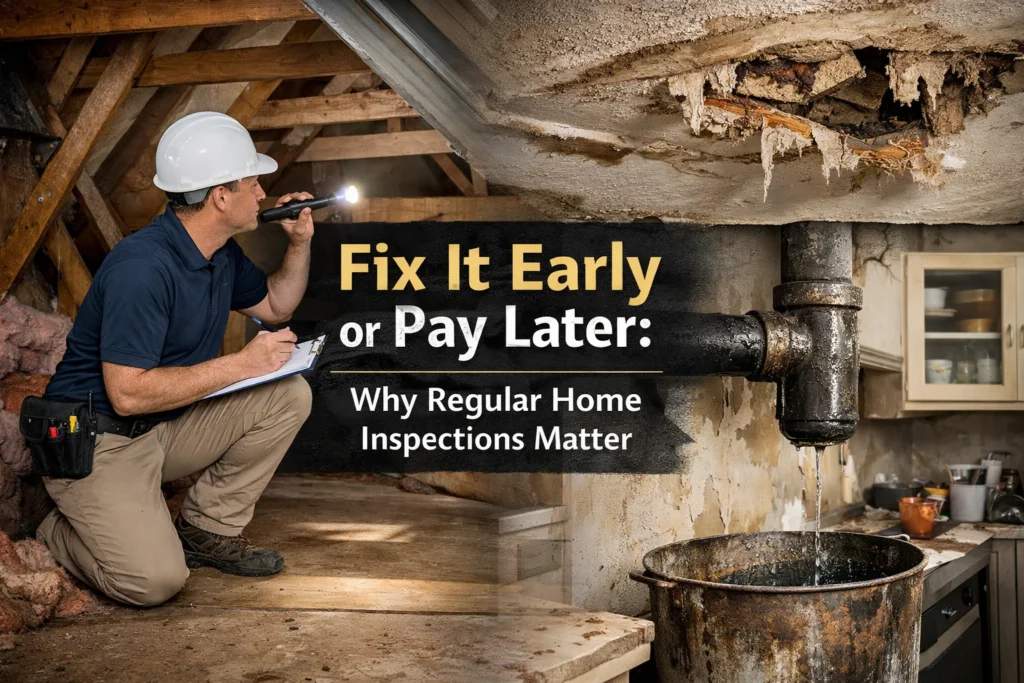
Fix It Early or Pay Later: Why Regular Home Inspections Matter
Many homeowners only react when something breaks. A leak, power failure, or AC issue suddenly demands urgent attention. Routine home inspections flip this approach. They help identify small issues before they turn into costly repairs. For Dubai homes, where heat, humidity, and constant system usage increase wear, inspections are not optional. They are essential. This article explains why regular checks save money, protect property value, and reduce stress, while emergency fixes often cost more than expected.
The Hidden Cost of Emergency Repairs
Small issues rarely stay small for long. Delays often turn manageable repairs into expensive emergencies. Emergency repairs usually arrive without warning and never at a convenient time. A minor fault ignored for weeks can suddenly disrupt your entire home. These urgent situations often cost more because they demand immediate labor, parts, and access. Homeowners often overlook how stress-driven decisions increase expenses, especially when repairs happen at night, on weekends, or during peak seasons when service availability is limited.
Why Emergency Fixes Cost More
Last-minute repairs remove your ability to plan. Contractors rush to restore function rather than prevent future failure, which often leads to short-term solutions instead of lasting repairs.
- Higher labor charges due to urgent scheduling
- Temporary fixes that lead to repeat problems
- Additional damage caused by delayed action
Stress Adds to the Expense
When systems fail suddenly, homeowners feel pressured to accept quick solutions. This leads to poor decisions and inflated costs, especially during unexpected home repair situations that could have been avoided with earlier checks and calm planning.
Routine Inspections Catch Problems Early
Prevention is quieter, cheaper, and more reliable. Inspections uncover issues before they affect daily life. Routine inspections focus on spotting early warning signs. Loose wiring, minor leaks, weak seals, and aging components all show signs before failure. Regular checks allow controlled repairs at lower costs and prevent disruption to routines, family comfort, and daily productivity inside the home.
What Inspections Typically Cover
A structured inspection reviews the most failure-prone areas of a home, ensuring nothing critical is overlooked.
- Electrical panels, wiring, and outlets
- Plumbing joints, valves, and water pressure
- AC performance, filters, and airflow
Early Action Protects Systems
By fixing problems early, homeowners avoid compounding damage. This proactive approach prevents the kind of repair chain reactions often caused by maintenance errors during renovation work, which increase long-term expenses and reduce system lifespan.
Financial Benefits Add Up Over Time
Small savings multiply year after year. Predictable maintenance beats surprise expenses. Routine inspections help spread costs evenly instead of absorbing one large repair bill. Planned maintenance allows homeowners to budget wisely and avoid emergency spending that often disrupts household finances and savings plans.
How Inspections Reduce Long-Term Costs
Preventive care extends the life of major systems and appliances while maintaining steady performance.
- Fewer emergency call-outs and breakdowns
- Longer lifespan for AC, plumbing, and wiring
- Reduced risk of structural damage
Better Planning Means Better Value
Inspections allow you to prioritize repairs and upgrades. This avoids costly mistakes caused by incorrect system installations, where overlooked issues later demand expensive corrections and additional labor.
Protecting Property Value and Safety
Well-maintained homes age better. Safety improves when risks are addressed early. A home in good condition holds its value longer. Inspections help preserve finishes, structure, and system performance while maintaining buyer and tenant confidence over time.
Safety Risks Inspections Prevent
Hidden faults can quietly put residents at risk if left unattended.
- Electrical overloads and fire hazards
- Water leaks causing mold and wall damage
- Poor air quality from neglected systems
Confidence for Homeowners and Tenants
Whether you live in your home or rent it out, inspections ensure safety compliance. Buyers and tenants trust properties with documented care and consistent maintenance history, which improves resale and rental appeal.
Why Dubai Homes Need Regular Inspections
Climate accelerates wear and tear. High usage increases system stress. Dubai’s environment puts constant pressure on homes. Air conditioning runs almost year-round. Humidity affects walls, wiring, and plumbing. Dust impacts ventilation systems and reduces efficiency faster than expected.
Common Local Wear Issues
Homes here face specific challenges that inspections help control.
- AC strain and reduced cooling efficiency
- Moisture damage inside walls and ceilings
- Electrical fatigue from high energy demand
Consistent Checks Reduce Climate Damage
Regular inspections adapt maintenance to local conditions. They help homeowners stay ahead of seasonal stress and avoid sudden system failure caused by environmental exposure and continuous usage.
Why Mqoola Services Makes Inspections Smarter
Experience turns checks into solutions. Reliable maintenance begins with the right partner. Mqoola Services approaches inspections with a preventive mindset. The focus is not just identifying problems, but resolving them correctly and early to reduce future costs.
What Sets the Approach Apart
Each inspection is tailored, not generic, and designed for real-world home use.
- Residential and commercial expertise
- Clear reports with practical repair advice
- Coordinated maintenance for long-term care
From Inspection to Action
Instead of waiting for breakdowns, homeowners gain a structured maintenance plan. This keeps homes efficient, safe, and cost-effective throughout the year with fewer disruptions.
Think Ahead, Spend Less
Routine inspections protect more than your home. They protect your budget, comfort, and peace of mind. Small fixes done early prevent major failures later. Instead of reacting to emergencies, proactive homeowners stay in control. For reliable inspections and preventive care, contact Mqoola Services and keep your home running smoothly before problems begin.
FAQs
How often should routine home inspections be done?
Most homes benefit from inspections once or twice a year, especially before summer and winter, when system usage increases significantly.
Are routine inspections expensive?
They cost far less than emergency repairs and help avoid unexpected expenses by identifying problems early.
Can inspections really prevent emergencies?
Yes. Most emergencies begin as small, visible issues that inspections catch before serious damage occurs.
Do inspections include electrical and plumbing systems?
Yes. A complete inspection reviews electrical, plumbing, AC, and structural components for safety and performance.
Is routine inspection useful for new homes?
Absolutely. Even new properties can have installation issues that inspections detect early, saving future repair costs.