
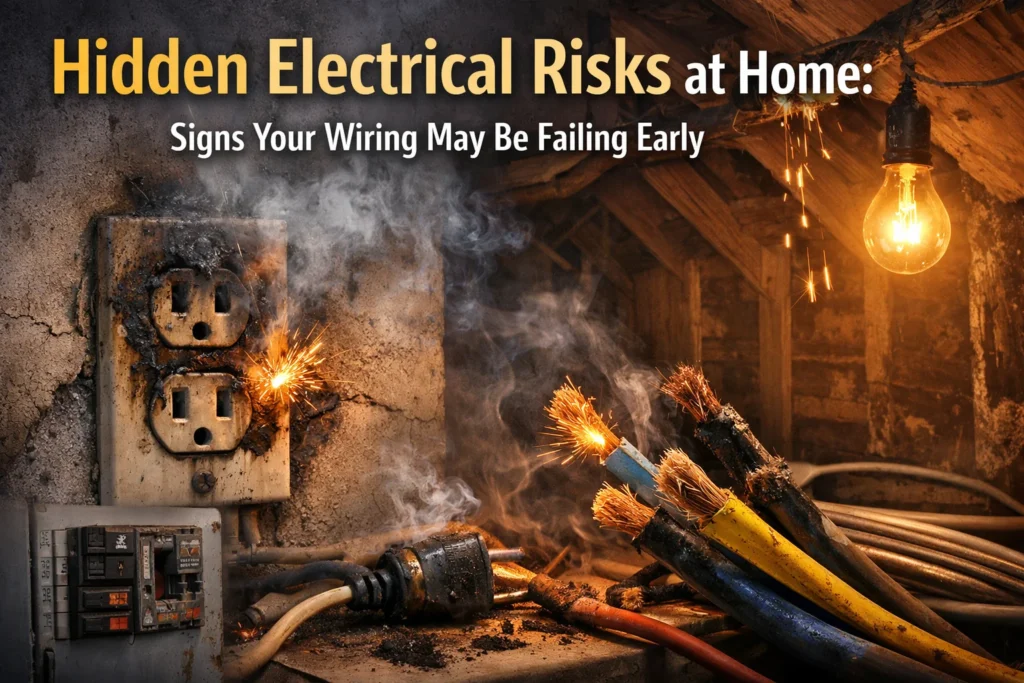
Hidden Electrical Risks at Home: Signs Your Wiring May Be Failing Early
Electrical issues rarely appear overnight. Most start small, hidden behind walls, ceilings, and switch plates. Aging wiring can quietly struggle under modern power demands, especially in homes built years ago. In Dubai’s climate, heat, humidity, and constant appliance use accelerate wear faster than many homeowners expect. Ignoring early warning signs can lead to power failures, appliance damage, or serious safety risks. This guide helps you spot the early clues of aging wiring, understand why they matter, and know when expert support from Mqoola Services can protect your home and family.
Flickering Lights That Appear Without a Clear Reason
Flickering lights are often the first sign homeowners notice. They may seem minor, but repeated flickers usually point to deeper issues.
Why Flickering Should Not Be Ignored
Lights that dim or flutter when appliances turn on suggest wiring strain. Older cables may not handle current loads well anymore. Over time, insulation weakens, and connections loosen, increasing resistance.
- Loose wiring connections behind switches
- Circuits overloaded by modern appliances
- Aging cables struggling with power flow
When Flickering Signals a Bigger Problem
Occasional flickers happen. Constant ones should not. Homes with outdated wiring systems are more vulnerable, especially when multiple rooms show the same issue.
- Flickers occur in multiple areas
- Lights dim when AC or heaters run
- Switches feel warm to touch
Why Professional Assessment Matters
Electrical issues linked to flickering lights often overlap with known safety concerns discussed in flickering lights and electrical hazards, where early action prevents costly damage and risk.
Frequent Tripped Breakers and Blown Fuses
Circuit breakers protect your home. When they trip often, they are doing their job for a reason.
What Repeated Tripping Tells You
Older wiring systems were not designed for today’s energy use. When demand exceeds capacity, breakers trip to prevent overheating or fire hazards.
- Multiple devices on a single circuit
- Outdated breaker panels
- Worn internal wiring
Warning Signs Inside the Electrical Panel
An aging electrical panel often shows physical signs before total failure. These issues worsen when ignored.
- Burning smell near the panel
- Buzzing sounds
- Rust or corrosion on components
Long-Term Impact on Home Safety
Ignoring breaker issues stresses appliances and increases fire risk. Professional inspections through trusted electrical services ensure circuits remain safe and balanced.
Discolored Outlets and Warm Switch Plates
Visual clues are easy to miss. But they speak loudly about wiring health.
Why Outlets Change Color Over Time
Brown marks or yellowing around outlets often signal heat buildup. This heat usually comes from poor connections or damaged wiring insulation.
- Loose wiring behind outlets
- Internal arcing
- Overloaded sockets
Physical Heat Is a Serious Warning
If switches or outlets feel warm, wiring stress is already present. Heat weakens insulation further, creating a dangerous cycle.
- Warm faceplates
- Slight plastic melting
- Crackling sounds when used
Environmental Factors That Accelerate Damage
High temperatures play a major role in wiring deterioration. Similar to how Dubai heat impacts AC lifespan, electrical systems also age faster under constant thermal stress.
Burning Smells or Unusual Electrical Odors
Your nose often detects danger first.
Electrical smells should never be ignored.
What Electrical Odors Usually Mean
A sharp, plastic, or burning smell often indicates overheating wires or melting insulation. These conditions increase fire risk dramatically.
- Insulation breakdown
- Short circuits
- Faulty wire joints
When Smells Come and Go
Intermittent odors are still dangerous. They often appear when circuits are under heavy load, such as during peak usage hours.
- Smells after appliance use
- Odors near switches or panels
- Scents that fade but return
Immediate Action Protects Lives
Any unexplained electrical smell requires urgent inspection. Aging wiring problems escalate quickly and should be addressed before structural damage occurs.
Outdated Wiring Materials Still in Use
Many older homes in Dubai still rely on wiring types that age poorly, even though they were standard decades ago. Over time, these materials become brittle, unsafe, and less capable of handling modern electricity demands. Knowing which wiring types deteriorate faster helps homeowners take preventive action.
Common Wiring Types That Deteriorate Faster
Some older wiring materials no longer meet today’s safety standards:
- Aluminum wiring, prone to oxidation and loose connections
- Cloth-insulated cables, which fray and crack over time
- Early PVC insulation, which can become brittle and brittle with heat exposure
Why These Materials Fail Early
Heat, frequent appliance use, and environmental factors accelerate aging:
- Increased electrical resistance causes inefficiency
- Higher fire risk due to insulation breakdown
- Poor compatibility with modern devices can trigger surges or flickering
Modern Upgrades Improve Safety and Efficiency
Replacing outdated wiring enhances performance, reduces energy loss, and ensures safer, long-term appliance operation. Regular inspections and upgrades maintain reliable and efficient electrical systems throughout the home.
Power Fluctuations and Appliance Malfunctions
Electrical issues often show up first through your appliances.
Unstable wiring quietly stresses electronics, reducing efficiency and lifespan.
Signs Your Wiring Is Affecting Appliances
When wiring struggles to deliver consistent voltage, sensitive devices are the first to suffer.
- Devices restarting unexpectedly or shutting down mid-use
- Lights dimming or flickering when appliances switch on
- Reduced lifespan of electronics due to repeated voltage stress
Hidden Costs of Ignoring Fluctuations
Ignoring inconsistent power can be costly over time. Appliances operate less efficiently, and frequent repairs or replacements add up quickly.
- Increased appliance failures and repair bills
- Higher electricity consumption due to inefficient energy flow
- Reduced overall efficiency of your home’s electrical system
Why Early Detection Saves Money
Regular inspections and preventive maintenance ensure stable power delivery, protecting both your home and expensive electronics. Addressing fluctuations early avoids long-term damage and keeps utilities running smoothly.
Protect Your Home Before Wiring Fails
Electrical wiring does not fail loudly at first. It gives warnings, subtle signs that grow serious when ignored. Flickering lights, warm outlets, breaker issues, and unusual smells all point to aging systems under stress. In Dubai’s demanding environment, early inspections make a real difference. Mqoola Services helps homeowners identify risks early and restore safety with professional care.
Book an electrical inspection today and protect your home before small issues turn dangerous.
FAQs
How long does home wiring usually last?
Most wiring lasts 30 to 50 years, but heat, humidity, and usage can shorten its lifespan significantly.
Can aging wiring increase fire risk?
Yes. Damaged insulation and loose connections raise overheating and fire hazards.
Do older homes need full rewiring?
Not always. Some need partial upgrades depending on condition and material type.
Are flickering lights always dangerous?
Occasional flickers are normal, but frequent or widespread flickering needs inspection.
How often should wiring be inspected?
Homes over 15 years old should have inspections every 3 to 5 years.