
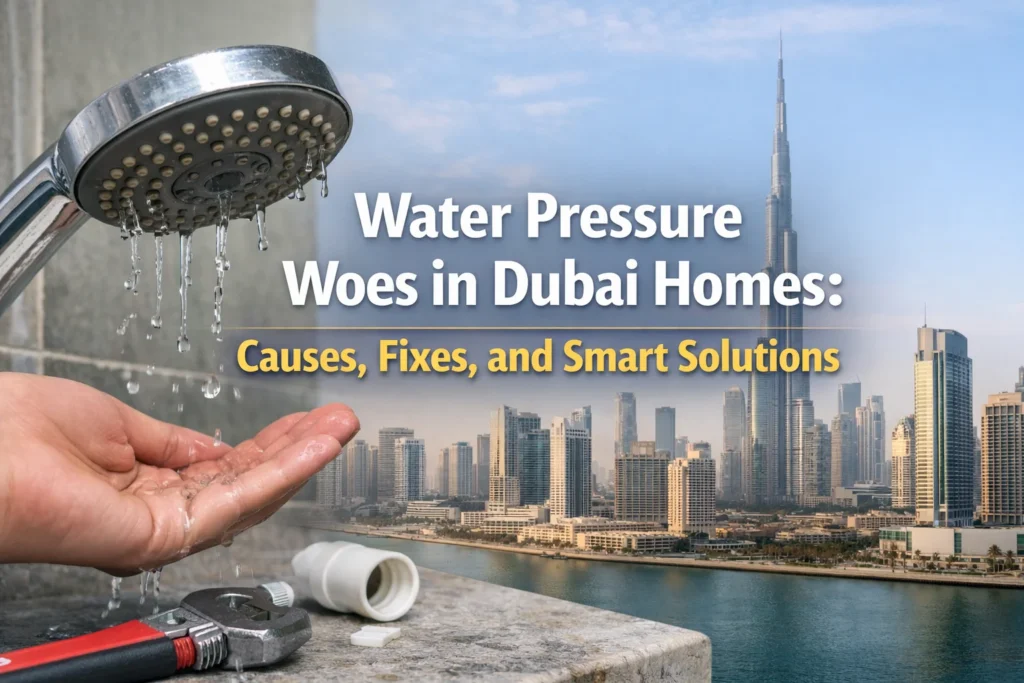
Water Pressure Woes in Dubai Homes: Causes, Fixes, and Smart Solutions
Consistent water pressure is essential for comfort in every Dubai home. Low or high pressure can disrupt daily tasks, damage appliances, and signal hidden plumbing issues. Understanding the causes of these fluctuations helps you take timely action. This guide explores common water pressure problems, practical DIY checks, professional solutions, and long-term maintenance tips to keep your home’s plumbing running smoothly and efficiently. With simple steps and expert guidance, you can prevent damage, save money, and enjoy reliable water flow throughout your property.
What Causes Low Water Pressure
Common Factors Behind Low Flow
Low water pressure can disrupt daily routines, but understanding the causes helps you take timely action. Several factors often contribute:
- Clogged Pipes: Over time, mineral deposits such as calcium and magnesium accumulate inside older plumbing systems, restricting water flow. This is particularly common in Dubai homes with hard water.
- Blocked Fixtures: Showerheads, taps, and faucet aerators can collect debris and scale, reducing water output at individual fixtures.
- Leaks: Hidden leaks, even small ones behind walls or under sinks, divert water and lower pressure throughout your home.
- Municipal Supply Variations: During peak demand hours, municipal water pressure may drop temporarily, affecting multiple homes.
- Floor Level Differences: Upper floors in multi-story buildings often experience reduced water pressure due to gravity.
Tips to Check Your Home’s Flow
- Remove and clean faucet aerators and showerheads to eliminate buildup.
- Inspect visible pipes and valves for signs of leaks or corrosion.
- Compare water flow at different fixtures to identify localized or system-wide problems.
Why High Water Pressure Happens
High water pressure might seem like a minor convenience, but it can cause serious damage to your plumbing system if left unchecked. Understanding the causes and signs helps homeowners act before problems escalate.
Common Causes of Excessive Pressure
- Faulty Pressure Reducing Valve (PRV): A malfunctioning PRV can allow too much water pressure to flow through your pipes, straining joints and fittings.
- Municipal Supply Fluctuations: Water supply in Dubai can vary throughout the day. During peak usage hours, pressure spikes can occur, especially in older neighborhoods.
- Old Infrastructure: Older pipes often lack modern pressure control mechanisms, making them more susceptible to high water flow and potential damage.
Signs Your Home Has High Pressure
- Banging Pipes or Water Hammer: Loud noises in pipes when taps are turned off indicate pressure surges.
- Frequent Leaks or Drips: High pressure weakens seals and joints, leading to persistent leaks.
- Appliance Wear and Tear: Water heaters, washing machines, and dishwashers may fail prematurely under constant high pressure.
Addressing these issues early protects both your plumbing and appliances. For professional evaluation and long-term solutions, refer to the professional home services guide to know when expert intervention is needed.
Simple DIY Checks and Quick Fixes
Easy Steps to Try at Home
Before calling a professional, you can perform a few basic checks to understand why your water pressure may be low. Start with cleaning faucet aerators and showerheads. Over time, mineral deposits can clog the tiny holes, reducing flow. Soak them in vinegar for a few hours, scrub gently, and rinse. This simple step often restores water flow immediately.
Next, check your main shutoff valve. If it is partially closed, water must squeeze through a narrower opening, lowering pressure throughout the house. Make sure the valve is fully open unless you are performing repairs.
Finally, inspect visible pipes and fittings. Look for leaks under sinks, behind appliances, or along exposed pipes. Tighten loose fittings or minor drips carefully, but remember that hidden or extensive leaks require professional attention.
When to Seek Help
DIY solutions are helpful for minor issues, but call a licensed plumber if:
- Multiple fixtures have low pressure simultaneously
- You hear strange noises or water hammer in pipes
- Pressure fluctuations persist despite your checks
Regular DIY checks combined with professional inspections help maintain consistent water flow and prevent costly damage, ensuring your plumbing system remains efficient and reliable.
Professional Solutions for Water Pressure Issues
When DIY fixes fail to restore proper water pressure, professional plumbing services are the safest and most reliable option. Experienced plumbers use specialized tools to identify and resolve issues that are difficult to detect on your own.
Services Experts Provide
- Pressure Testing: Professionals measure water flow and pressure throughout your home to locate weak spots and system-wide inconsistencies.
- PRV Installation or Replacement: A faulty Pressure Reducing Valve (PRV) can cause excessive pressure, leading to pipe stress and leaks. Experts install or recalibrate PRVs to maintain stable pressure.
- Hidden Leak Detection: Using advanced diagnostic tools, plumbers can find leaks behind walls, under slabs, and beneath appliances that would otherwise go unnoticed.
Benefits of Calling a Professional
- Prevents costly damage to pipes, fixtures, and appliances caused by untreated pressure problems.
- Extends the lifespan of your plumbing system by addressing underlying issues early.
- Ensures efficient water flow, helping to reduce water wastage and lower energy bills associated with heating or pumping water.
For a deeper understanding of plumbing issues that often overlap with pressure problems, check out pipe leak causes in Dubai. Combining preventive plumbing care with professional inspections helps homeowners maintain a reliable and efficient water system.
Long-Term Maintenance Tips
Keep Your Water Pressure Steady Year-Round
Maintaining consistent water pressure in your Dubai home requires a proactive approach. Regular care not only ensures comfort but also extends the lifespan of your plumbing system.
Annual Inspections
- Schedule professional checks at least once a year.
- Inspect pressure valves, pipe integrity, and fittings for wear or corrosion.
- Detecting small issues early prevents major repairs and keeps water flow consistent.
Temperature Protection
- Pipes expand and contract with heat, especially in high-use areas.
- Insulate hot and cold water pipes to reduce stress on joints and prevent leaks.
- Protecting your system from temperature fluctuations helps maintain stable pressure.
Avoid Harsh Chemicals
- Strong chemical cleaners can corrode pipes, reducing flow over time.
- Use natural cleaning methods or professional drain services to maintain healthy plumbing.
Record-Keeping
- Track maintenance schedules, pressure test results, and any repairs.
- Keeping detailed records helps identify recurring problems and plan preventive measures.
By following these long-term maintenance practices, homeowners achieve sustainable home plumbing and reliable water pressure. A small investment in routine care today can prevent expensive emergencies tomorrow, ensuring your system runs efficiently for years to come.
Upgrading Systems for Better Performance
Modern Solutions for Older Homes
Older plumbing systems often struggle to meet today’s household water demands. Upgrading pipes and fixtures not only improves flow but also prevents future damage. Consider the following options:
- Replace Old Pipes: Switching to durable materials like PVC, PEX, or copper can prevent corrosion, leaks, and mineral buildup that reduce water pressure.
- Install Pressure Booster Pumps: Homes with multiple floors often experience low pressure on upper levels. A booster pump ensures stable flow throughout the house.
- Upgrade Fixtures: Modern faucets, showerheads, and taps are designed to deliver consistent flow while saving water. Upgrading reduces strain on the system and enhances efficiency.
Professional Diagnostics and Installation
Before making any upgrades, professionals test your current water pressure and evaluate your home’s plumbing layout. This ensures that new components are compatible and perform optimally.
- Conduct a thorough inspection to locate weak spots or hidden damage.
- Plan upgrades according to your home’s usage patterns and layout.
- Combine installation with routine maintenance to maximize longevity and efficiency.
By investing in these upgrades, homeowners in Dubai can enjoy reliable water flow, better energy efficiency, and reduced maintenance costs over time, while also improving overall home plumbing optimization and water efficiency upgrades.
Restore Comfort with Reliable Water Flow
Low or high water pressure can disrupt daily life, but timely action prevents damage and costly repairs. Simple DIY checks paired with professional inspections ensure your Dubai home’s plumbing stays efficient and safe.
Schedule a professional plumbing inspection today to stabilize pressure, protect appliances, and enjoy consistent water flow throughout your home.
FAQs
Q1: Why is my Dubai home experiencing low water pressure?
A: Low water pressure is often caused by mineral buildup inside pipes, hidden leaks, or fluctuations in municipal water supply. These issues can reduce flow across multiple fixtures if not addressed promptly.
Q2: Can high water pressure damage my plumbing?
A: Yes, excessive water pressure puts strain on pipes, joints, and fixtures, leading to leaks or bursts. It can also shorten the lifespan of appliances like water heaters and washing machines.
Q3: How can I check water pressure myself?
A: You can measure pressure using a gauge attached to an outdoor spigot or washing machine outlet. A healthy range is typically between 40–60 psi for most Dubai homes.
Q4: When should I call a plumber for pressure issues?
A: If low or high pressure affects multiple taps or showers, or DIY adjustments don’t improve flow, it’s time to call a professional. Early action prevents costly repairs.
Q5: Do pressure boosters work in all homes?
A: Pressure booster pumps are ideal for buildings with low municipal pressure or multi-story homes where gravity reduces flow. A professional assessment ensures it’s suitable for your system.