
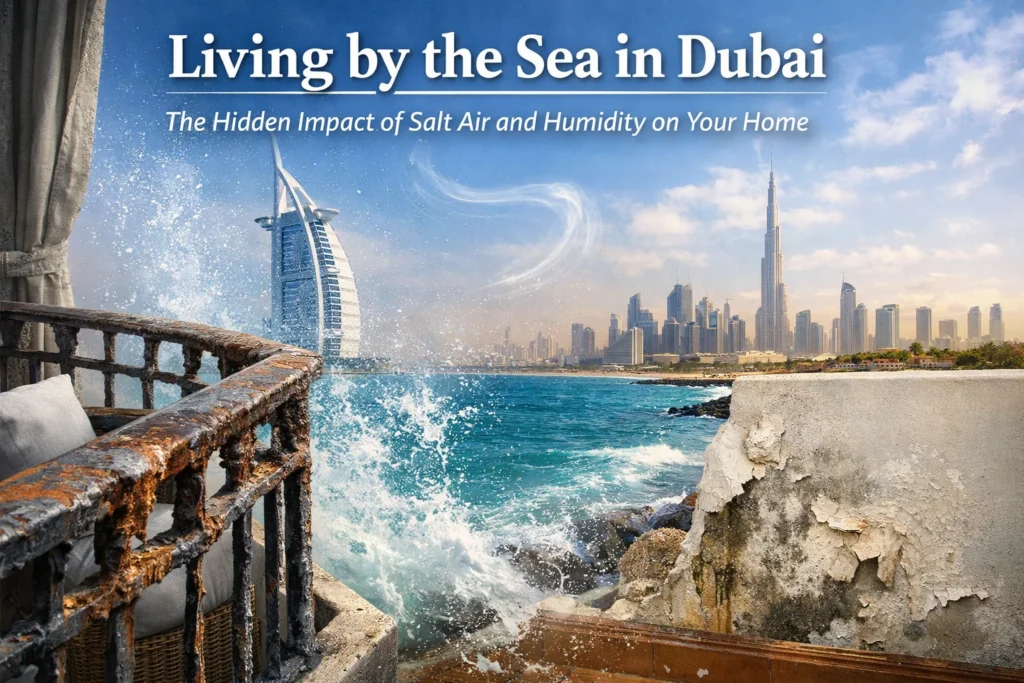
Living Near the Sea in Dubai, How Salt Air and Humidity Impact Your Home
Living near the coast in Dubai offers beautiful views, cooler breezes, and a relaxed lifestyle. But behind the scenery, salt air and high humidity quietly affect homes every day. These coastal elements speed up wear and tear, damage materials, and increase maintenance needs. Many homeowners only notice the impact when repairs become costly. This guide explains how salt air and humidity affect coastal homes in Dubai, which areas are most at risk, and what preventive steps help protect your property long term. With the right care and timely maintenance, coastal living can stay comfortable and stress-free.
Why Coastal Homes in Dubai Face Unique Challenges
Dubai’s coastal homes deal with conditions that go beyond normal wear and tear. Living close to the sea brings fresh air and views, but it also exposes buildings to constant salt and moisture. These elements slowly affect materials, systems, and indoor comfort if left unmanaged.
The Role of Salt Air Exposure
Salt particles travel easily from the sea and settle on walls, windows, and outdoor units. Once salt rests on surfaces, it attracts moisture from the air. This process speeds up rust, paint damage, and surface wear.
Common Areas at Risk
- Metal railings, hinges, and fittings
- Window frames and balcony fixtures
- Outdoor AC units and fasteners
Without regular cleaning and protection, these areas weaken faster than expected.
How High Humidity Impacts Indoor Spaces
Humidity stays high in coastal Dubai for most of the year. Moist air enters homes and becomes trapped, especially in closed rooms. This creates ideal conditions for mold, mildew, and unpleasant odors.
Over time, moisture affects walls, ceilings, and furniture. Electrical systems and air conditioning also work harder in these conditions.
Coastal homes need proactive maintenance. Routine inspections, moisture control, and timely repairs help prevent small issues from turning into costly damage. Taking early action keeps homes safe, comfortable, and long-lasting.
How Salt Air Affects Building Materials
Salt air is one of the biggest threats to homes located near Dubai’s coastline. It may seem harmless, but over time, salt particles settle on exposed surfaces and begin to break materials down. This damage often starts quietly and becomes visible only when repairs are costly.
Metal Corrosion Happens Faster in Coastal Areas
Salt attracts moisture from the air. When salt and moisture combine on metal surfaces, corrosion speeds up quickly. Even treated metals wear down faster in coastal environments compared to inland homes.
Metal Components Most at Risk
- Balcony railings and safety grills
- Door handles, locks, and hinges
- Window frames and sliding tracks
- AC outdoor units and mounting brackets
- Screws, bolts, and fasteners
As corrosion spreads, paint begins to bubble and peel. Metal weakens, joints loosen, and fixtures may fail sooner than expected. This not only affects appearance but also safety and functionality.
Protective coatings and anti-rust treatments help slow the process, but they are not permanent. Regular inspection and timely reapplication are essential for coastal homes. With consistent care and professional maintenance, homeowners can extend the life of building materials and avoid sudden replacements.
Damage to Exterior Paint and Finishes
Salt particles break down exterior paint faster than normal conditions. You may notice:
- Fading colors
- Peeling or blistering paint
- Rough wall textures
This exposes walls to moisture, which leads to cracks and water seepage. Repainting coastal homes more frequently is often necessary to maintain protection.
Humidity and Its Effect on Indoor Spaces
High humidity is a constant challenge for homes near Dubai’s coast. Moist air enters living spaces and settles on surfaces, often without immediate signs. Over time, this trapped moisture affects comfort, cleanliness, and overall indoor health.
Moisture Buildup Inside the Home
When humidity remains high, moisture collects on walls, ceilings, and furniture. Rooms with limited airflow, such as bedrooms, bathrooms, and storage areas, are most affected. Poor ventilation allows damp air to linger, making the problem worse.
Common Signs to Watch For
- Damp or discolored walls
- Condensation forming on windows and mirrors
- Persistent musty or stale smells
- Sticky or heavy indoor air
These conditions reduce indoor air quality and create an uncomfortable living environment. Moisture buildup also places extra strain on air conditioning systems, forcing them to work harder to maintain comfort. Without proper control, humidity can lead to mold growth and material damage. Regular ventilation, humidity control, and timely maintenance help keep indoor spaces dry, fresh, and healthy.
Mould and Mildew Growth
Humidity creates the perfect environment for mould and mildew, especially in bathrooms, kitchens, wardrobes, and AC ducts.
Left untreated, mould spreads quickly and affects health, especially for children and those with allergies. If you notice dark patches or persistent odors, it’s important to act early. Following a proper mildew and mould removal guide helps protect both health and property before the issue escalates.
Impact on Air Conditioning Systems
Air conditioning systems in coastal Dubai homes work under constant pressure. High humidity and salt air affect both performance and durability. Over time, these conditions reduce efficiency and increase the risk of breakdowns if maintenance is delayed.
Why Coastal Conditions Strain AC Units
Salt particles settle on outdoor units and coils, causing corrosion and surface damage. At the same time, excess moisture forces the system to work harder to remove humidity from indoor air. This combination lowers cooling efficiency and increases energy use.
Common AC Problems in Coastal Homes
- Reduced cooling performance and uneven airflow
- Higher electricity bills due to overworked systems
- Frequent breakdowns and unexpected repairs
- Shortened lifespan of AC components
Regular AC servicing is essential for coastal properties. Cleaning coils removes salt buildup, clear drainage prevents water leaks, and inspecting outdoor units helps catch corrosion early. Timely maintenance keeps AC systems reliable, energy-efficient, and comfortable throughout the year.
Hidden Areas Most Affected by Coastal Conditions
Not all coastal damage shows up on the surface. In many Dubai homes near the sea, the most serious issues develop quietly in hidden spaces. Salt air and humidity seep into areas that are rarely inspected, allowing damage to grow unnoticed.
Where Problems Often Go Unseen
Moisture and salt settle deep within a home’s structure and systems. These areas remain exposed for long periods without regular checks.
Common Hidden Risk Zones
- Electrical wiring connections behind walls
- Plumbing joints under sinks and flooring
- Wall cavities that trap humid air
- Ceiling voids above living spaces
- AC ducting where moisture collects
Over time, corrosion weakens electrical connections, plumbing joints loosen, and damp air damages insulation. Homeowners often discover these problems only during renovations or emergency repairs. This is why routine inspections matter. Addressing hidden home maintenance tasks in Dubai early helps prevent sudden system failures, safety risks, and unexpected repair costs, keeping coastal homes secure and well maintained.
Furniture and Interior Finishes at Risk
Humidity in coastal areas affects daily living spaces more than many homeowners expect. Moist air settles into furniture, soft furnishings, and decorative finishes, slowly reducing their lifespan and appearance.
How Moisture Damages Indoor Furnishings
Wood absorbs humidity easily, which causes visible and hidden damage over time.
Common Signs to Watch For
- Swelling and warping in wooden tables, doors, and cabinets
- Fine cracks forming on polished or painted surfaces
- Mold growth behind wardrobes, kitchen units, and wall panels
- Upholstery developing stale or musty odors
- Metal fixtures corroding without obvious surface rust
Good airflow plays a key role in prevention. Using dehumidifiers, maintaining AC systems, and selecting moisture-resistant materials helps protect interiors. For coastal homes, smart material choices and regular inspections keep furniture looking fresh and extend its usable life while improving overall indoor comfort.
Electrical Systems and Safety Concerns
Moisture and salt in coastal areas quietly affect your home’s electrical system. Over time, damp air reaches wiring, sockets, and internal connections. This increases safety risks and reduces system reliability. Many issues start small but worsen without early attention.
How Moisture Damages Electrical Components
Salt and humidity cause corrosion at connection points. This leads to common warning signs such as:
- Flickering lights in rooms or hallways
- Circuit breakers tripping more often
- Switches that feel loose or stop working
- Higher risk of short circuits and fire hazards
Why Professional Inspections Matter
Regular electrical inspections help identify corrosion before it becomes dangerous. For coastal homes, sealed fittings and moisture-resistant components are essential. Professional installation ensures safer power flow, better performance, and long-term protection, while improving overall home safety and reliability.
Simple Steps Homeowners Can Take
Improve Ventilation
Good airflow reduces moisture buildup. Use exhaust fans, open windows during low humidity hours, and maintain AC systems properly.
Clean and Protect Surfaces
Wipe down metal fixtures regularly. Apply protective coatings where needed.
Monitor Humidity Levels
Use dehumidifiers in enclosed spaces. Keep indoor humidity at comfortable levels.
Schedule Routine Inspections
Professional checks ensure hidden issues don’t go unnoticed.
How Mqoola Services Helps Coastal Homes Stay Protected
Living near the coast requires extra care, and Mqoola Services specializes in protecting Dubai’s coastal homes. Their team provides tailored solutions to prevent damage caused by salt air and high humidity, keeping properties safe, efficient, and comfortable.
Comprehensive Coastal Home Services
- AC and Ventilation Maintenance: Ensures airflow and cooling systems function efficiently
- Electrical Inspections: Detects corrosion and moisture-related issues early
- Moisture Control Solutions: Prevents mold, mildew, and structural damage
- Interior and Exterior Upkeep: Protects walls, finishes, and fixtures from salt exposure
- Preventive Maintenance Planning: Creates long-term schedules to avoid costly repairs
Why Choose Mqoola Services
Their proactive approach helps homeowners stay ahead of problems. Regular inspections and professional care not only reduce repair costs but also preserve property value, ensuring a comfortable and safe living environment year-round.
Protect Your Coastal Home Before Damage Strikes
Salt air and humidity are part of coastal life in Dubai, but their impact on homes doesn’t have to be overwhelming. From corrosion and mould to AC strain and hidden damage, these factors work quietly over time. Understanding the risks and acting early makes all the difference. With regular inspections, smart upgrades, and expert support from Mqoola Services, homeowners can protect their property, improve comfort, and enjoy coastal living without constant repairs. Prevention remains the most cost-effective solution.
Schedule a professional inspection with Mqoola Services today and safeguard your home from hidden coastal damage.
FAQs
1. Do coastal homes in Dubai require more maintenance?
Yes. Salt air and humidity speed up corrosion, moisture damage, and system wear.
2. How often should AC systems be serviced near the coast?
Ideally every three to four months to prevent corrosion and efficiency loss.
3. Can humidity cause mould even in new homes?
Yes. Poor ventilation and trapped moisture can lead to mould quickly.
4. Are dehumidifiers effective for coastal homes?
Yes. They help control indoor moisture, especially in enclosed areas.
5. Is preventive maintenance worth the cost?
Absolutely. It reduces long-term repair expenses and protects property value.